Two open protocols are reshaping how AI agents talk to the world. MCP (Model Context Protocol) came first, launched by Anthropic in November 2024. Then Google shipped A2A (Agent-to-Agent Protocol) in April 2025. Now they're both under the Linux Foundation. A lot of engineers I talk to ask some variant of the same question: what are they both trying to achieve and how do they differ? They solve different problems entirely. They're complementary, not competitive. But the details matter, and most explainers get this the hard way.
Let me walk you through what each one actually does, then I'll show you why they need each other.
MCP: Your Agent's Toolkit Connection
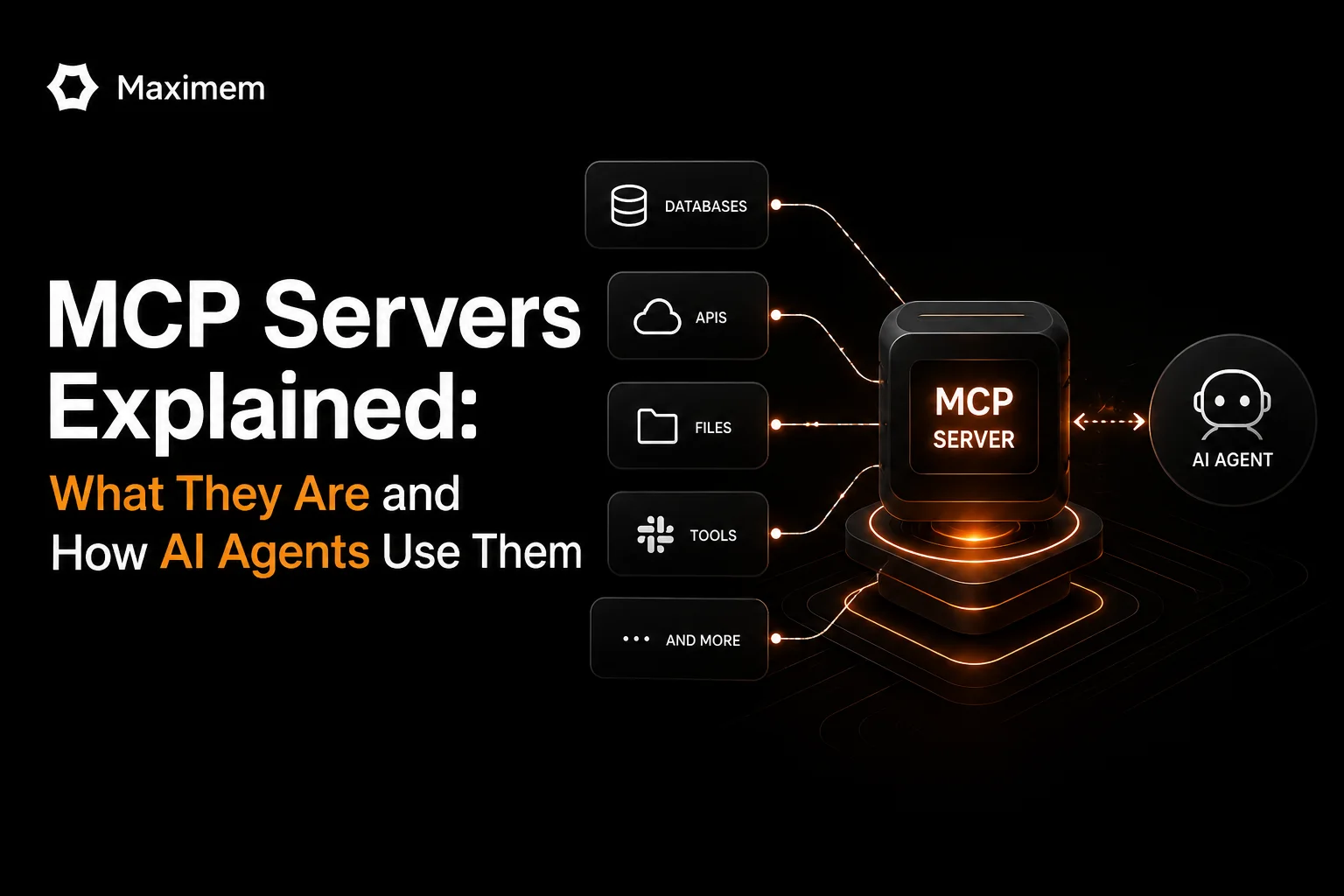
MCP standardizes how agents plug into external tools and data sources. Anthropic built it first because they wanted a cleaner way for Claude to use APIs, databases, and knowledge bases. The protocol is simple by design: JSON-RPC 2.0, runs over STDIO or HTTP, and the agent can call three types of things. For a comprehensive deep dive into how MCP works, see [MCP Servers Explained](/blog/mcp-servers-explained).
Tools let your agent take actions. Resources let your agent read data. Prompts are templates that guide reasoning. That's the whole vocabulary.
The ecosystem grew fast. Anthropic claims 97 million SDK downloads monthly and 18,000 active servers. OpenAI supports it now. Google supports it. Microsoft, IBM, AWS tools work with it. If you're building any agentic system in 2026, MCP is already the default way to wire in external capabilities.
The key insight: MCP is a protocol for what an agent uses. It doesn't care about other agents. It cares about databases, APIs, and documents.
A2A: How Agents Talk to Each Other
Google's A2A solves a completely different layer. Instead of "how does an agent use a tool," it asks "how does one agent ask another agent for help?"
A2A uses Agent Cards, which are JSON files that live at /.well-known/agent-card.json on a service or domain. An Agent Card is basically a resume for an agent. It says what capabilities the agent has, what formats it speaks (text, audio, video, structured data), what protocols it supports. When Agent A encounters a task it can't handle alone, it discovers Agent B by reading Agent B's Agent Card, then sends the task over HTTP or SSE.
Google launched this in April 2025. Over 100 technology partners already signed on: Microsoft, Salesforce, SAP, and dozens of others. Linux Foundation picked it up almost immediately, same as MCP.
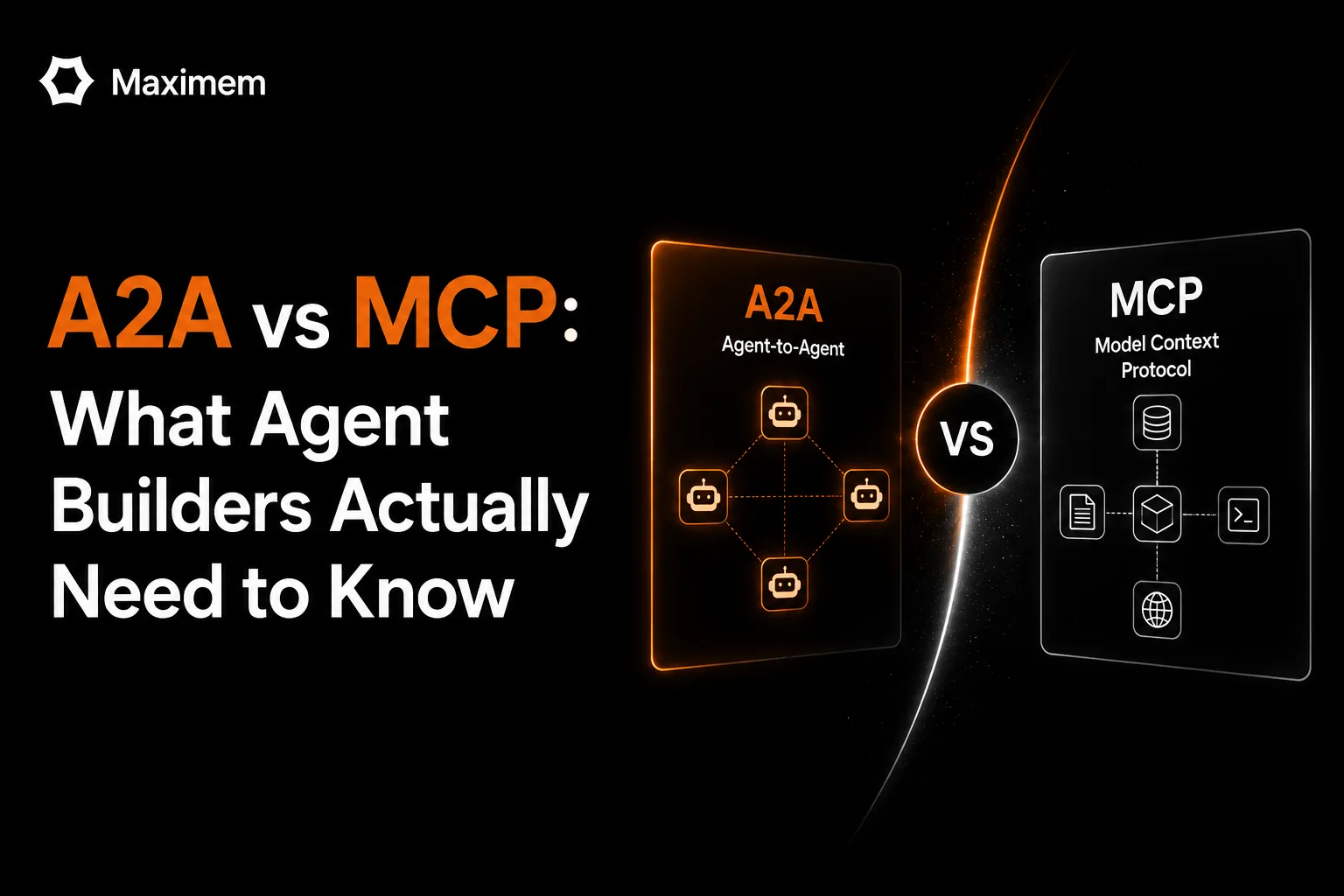
The contrast is sharp: MCP connects agents to tools. A2A connects agents to other agents. Different layers.
Let's understand further through a simple example
I want to show you why both matter, because abstract layering puts people to sleep.
Picture a customer support system. Customer emails a question about their billing. Here's what happens:
1. Agent A receives the query and recognizes it involves billing. It needs account data.
2. MCP kicks in. Agent A calls a database tool over MCP to fetch the customer's account history. That's agent-to-tool communication.
3. Agent A reads the billing policy. Another MCP call to fetch a document resource. Still agent-to-tool.
4. Now the tricky part. Agent A realizes this case needs specialist judgment. It finds the Billing Specialist Agent.
5. A2A takes over. Agent A discovers Agent B (the Billing Specialist) by reading its Agent Card. Agent A sends the task payload, including the customer data it already fetched.
6. Agent B works the case. It uses its own MCP connections to call the payment API and update the policy system. Agent B, internally, is using MCP to leverage tools.
7. Agent B sends back the resolution to Agent A via A2A.
8. Agent A writes the customer response in natural language and sends it back.
In that workflow, MCP happened three times (steps 2, 3, 6). A2A happened twice (steps 5, 7). Neither protocol could handle the full flow alone. That's the key. They nest inside each other.
Your agent framework sits in the middle. Whether you use LangChain, CrewAI, AutoGen, or something custom, it orchestrates both protocols. A2A floats on top, orchestrating between agents. MCP sinks underneath, powering each agent's tool access.
Side-by-Side Comparison
| Dimension | MCP | A2A |
|-----------|-----|-----|
| Purpose | Agent-to-tool/data connection | Agent-to-agent communication |
| Created by | Anthropic (Nov 2024) | Google (Apr 2025) |
| Governance | Linux Foundation (AAIF) | Linux Foundation |
| Transport | JSON-RPC 2.0, STDIO or HTTP/SSE | HTTP, SSE, JSON-RPC |
| Discovery | Server schema declares capabilities | Agent Cards at /.well-known/agent-card.json |
| Data formats | JSON structured I/O | Text, audio, video, structured data streams |
| Major supporters | Anthropic, OpenAI, Google, Microsoft | Google, Microsoft, Salesforce, SAP |
| Ecosystem maturity | Established (18,000+ servers) | Emerging, scaling rapidly (100+ partners) |
| Best suited for | Single agent needing tools | Multi-agent coordination |
When You Actually Need What
Let me cut through the confusion with a practical decision tree.
Use MCP if: You're building any agent that touches external APIs, databases, or document systems. Which is to say, use MCP. Period. This is table stakes now. Every modern agent needs tool integration, and MCP is the standard interface.
Use A2A if: You're building a multi-agent system where agents need to discover and delegate to each other. You've got an enterprise with specialized agents in different departments and they need to coordinate. You want agents to share findings or ask for help without hard-coding agent addresses.
Use both if: You're building the kind of system that enterprise customers actually want in 2026. Real-world complexity almost always means multiple agents, each with their own tools. MCP for individual agent capability. A2A for the orchestration layer.
Skip A2A for now if: You're building a single-agent application. Your agents don't need to talk to each other yet. You're early stage and multi-agent architecture feels premature.
The truth is, most new projects should at least prepare for both. Even if you ship with just MCP, your agent API should be A2A-ready. Future you will thank present you.
What's Actually Coming
Both protocols are now under the Linux Foundation, which suggests they're converging toward tighter integration eventually. Gartner is forecasting that 40 percent of enterprise applications will include task-specific agents by the end of 2026, compared to less than 5 percent right now. That's not hype. That's a scaling infrastructure problem, and MCP plus A2A is how enterprises solve it.
Huawei is already extending A2A for telecommunications (A2A-T), which signals that vertical-specific variants are coming. The agent protocol stack is starting to look like HTTP plus REST plus GraphQL: a base protocol, then layers of convention for different use cases.
Agent builders should study both protocols now, even if your project only needs MCP today. In twelve months, A2A competency will be standard hiring criteria.
In Conclusion
MCP and A2A are not fighting for dominance. They operate at different levels of the agent communication stack. MCP is how an agent uses tools. A2A is how agents use each other. Both are becoming infrastructure.
Learn MCP first. It's immediately useful for virtually every agent project. Add A2A when your architecture grows to include multiple agents that need to coordinate. Both will be standardized infrastructure within a year.
If you're evaluating agent infrastructure platforms, Synap supports both A2A and MCP, which is worth noting as you compare vendors. But that's the factual piece. The real message is simpler: understand both protocols, because within eighteen months they'll be as foundational to agent engineering as REST is to backend engineering today. For a complete glossary of protocols and terminology, see our [AI Glossary](/glossary).