Developer Guides
Skills Are the New Microservices: How to Think About Composable AI Agents
The agent ecosystem in 2026 feels stuck in 2014. Except instead of monolithic backend services, we're building monolithic prompts.
Here's what I mean. You write an instruction set for your agent. It grows. Then it grows more. Four thousand tokens. Thirty functions scattered across tool definitions. A system prompt that reads like a military field manual. When something breaks—and it will—nobody can tell which part failed. Did the retrieval logic get confused? Is the tool routing broken? Was the instruction for handling edge cases wrong?
This was exactly the problem that killed backend development fifteen years ago. Monolithic applications were slow to iterate, difficult to debug, impossible to scale. The microservices movement fixed that. Not perfectly, not without introducing new complexity and operational headaches. But the core insight was solid: break the monolith into composable, independently deployable units with clear interfaces.
Skills are doing the same thing for agents. Most teams haven't realized it yet.
What Skills Actually Are (and Are Not)
Let me cut through the vocabulary mess first. Everyone conflates this, and it matters.
Skills are not tools. A tool is a discrete action you can invoke. search_web(query). send_email(to, body). Tools execute and return a result. You call them. They do a thing. Done.
Skills are different. They're packaged expertise.
A skill includes instructions. Workflows. Behavioral guidance. Domain knowledge that changes how your agent thinks, not just what it can do. A tool expands capability. A skill changes decision-making.
Think about it this way. A tool says: "Here is a function you can call." A skill says: "Here is how to approach problems in this domain. These are the patterns that work. Avoid these mistakes. Follow this workflow. When you see this condition, do that."
The distinction matters because it changes how you architect agents.
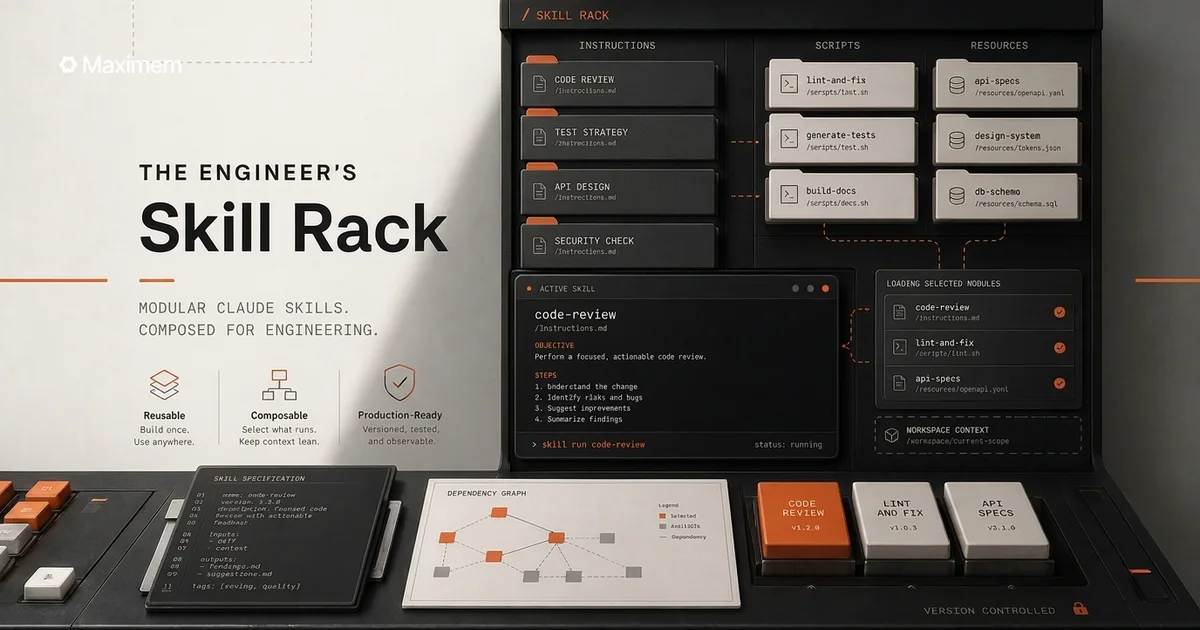
Look at what's converging across platforms right now. Claude Code uses SKILL.md files (structured instructions with reference docs and Python CLI tools attached). Cursor integrates agent skills directly into IDE context. VS Code's Copilot loads skills through a similar mechanism. The open standard emerging across all of them is skills.sh—a spec that works with Claude Code, Cursor, VS Code, Copilot, Gemini CLI, OpenCode, and Windsurf. Spring AI brought this thinking into the Java ecosystem. The awesome-agent-skills repository on GitHub has 500+ community skills now. Skills work even better when MCP enables skill composition across your agent systems.
Different vendors. Same architectural pattern. That convergence tells you something important.
The Microservices Parallel (With Caveats)
Okay, here's where I risk overselling the comparison. But I think it holds.
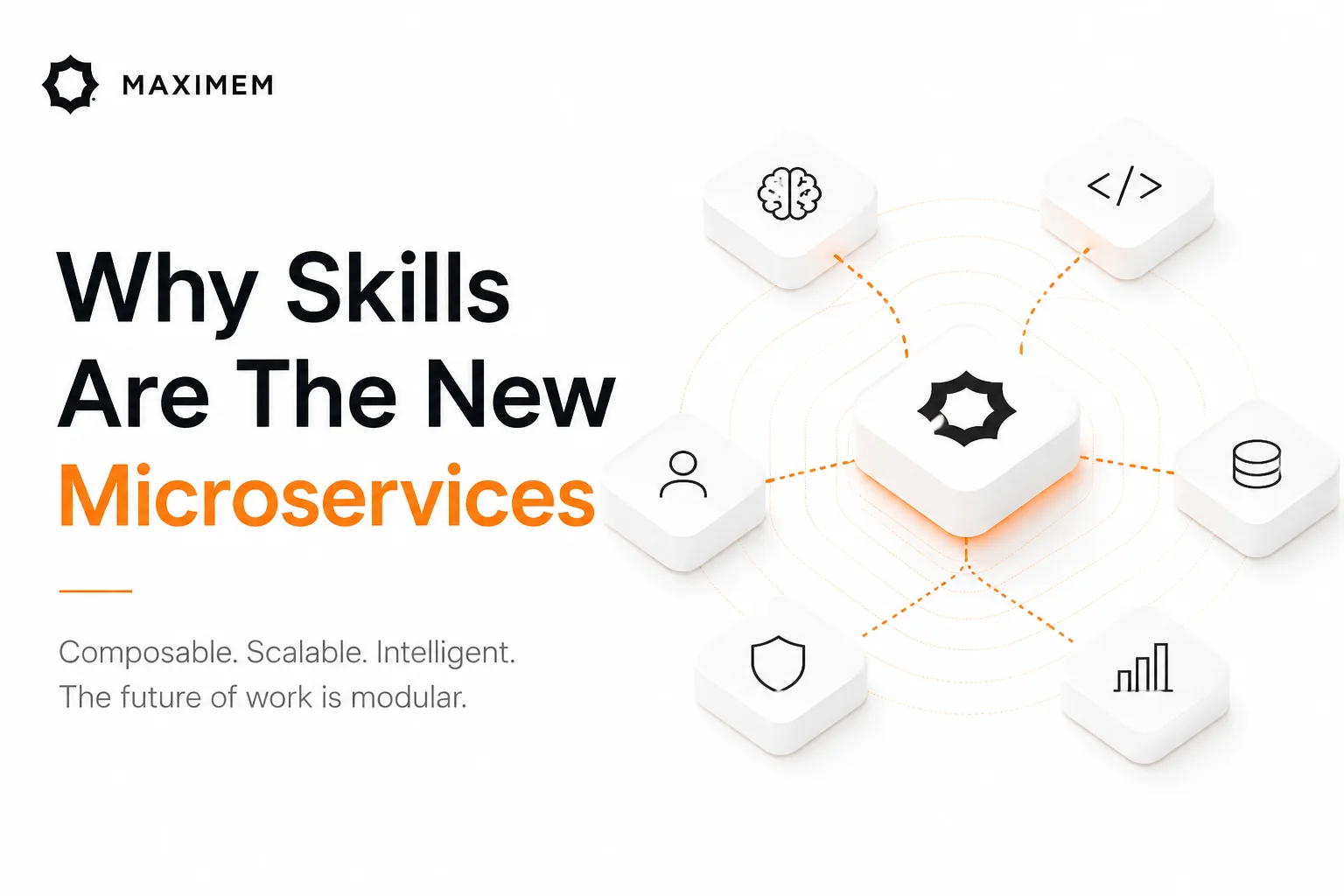
Composability. Microservices let you assemble a payment service with a notification service with an auth service. Each is independent. You can update one without touching the others. Skills work the same way. Combine a "customer research" skill with an "email drafting" skill with a "CRM lookup" skill. Update the research skill. The email skill doesn't care.
Single responsibility principle. A good microservice does one thing well. A payment service shouldn't also handle user authentication. Same rule applies to skills. Your "financial analysis" skill shouldn't double as a marketing copywriter. Scope matters.
Independent deployment and versioning. Here's something architects love about microservices: you can deploy a new version of the payment service without redeploying everything. Same with skills. Version 2 of your "code review" skill doesn't require retraining or redeploying the entire agent. Just swap the skill definition.
Service discovery. In a microservice world, you need mechanisms to figure out which service to call. A user wants to pay. So call the payment service. Agents face the identical problem. When should I activate the financial analysis skill versus the market research skill? That's agent-level service discovery. For teams with multiple agents, understanding agent-to-agent coordination becomes critical.
Now here's where it breaks. And I think understanding this gap is more valuable than pretending the analogy is perfect.
Context is a hard constraint. Every skill you load consumes tokens. You can't load fifty skills the way you can spin up fifty microservices. There's a fixed budget: your context window. A microservice architecture can scale horizontally by adding servers. A skill architecture has a context ceiling that's firm and unforgiving. Overload the context and everything degrades.
Probabilism. Microservices are deterministic. The same request produces the same response (barring external state changes). Skills operate in a probabilistic system. The same skill might behave differently on different runs because the underlying model is generative, not mechanical.
Soft interfaces. Microservices use strict APIs. Skill interfaces are natural language instructions. That softness is actually useful (it lets agents adapt), but it's nothing like the rigid contracts that make microservice systems reliable.
Patterns That Actually Work
So how do teams structure this without drowning in complexity?
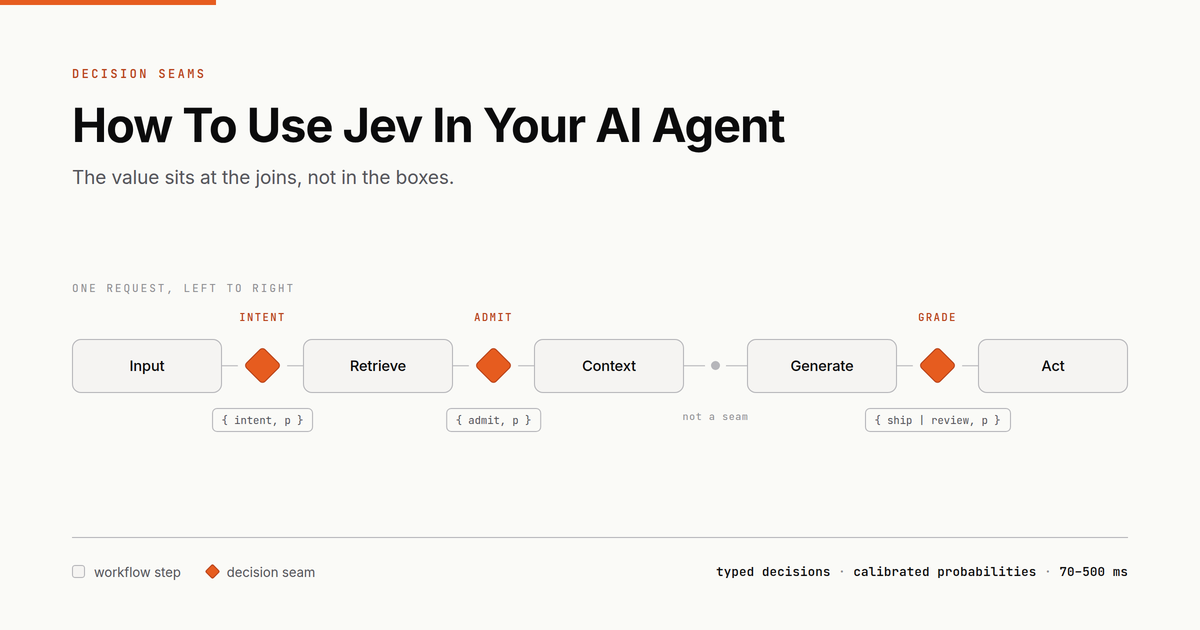
Progressive disclosure. Don't activate all your skills upfront. Load a lightweight triage skill first. Based on the task, activate the relevant domain skill. This keeps token overhead reasonable and routing precise. The pattern looks like: Triage agent (minimal overhead) routes to Domain agent (skill-loaded). It mirrors how microservices use API gateways.
Skill composition rules. Keep individual skills under 500 tokens (instruction content, not including reference docs). Design them to be independent. No skill should assume another skill has already run. Test skills in isolation before combining. Use clear trigger conditions so the agent understands when to activate each skill.
The skill library pattern. Maintain a registry of skills with metadata: domain, trigger conditions, version, last updated. Let the orchestrator query the registry instead of hardcoding skill selection. This is explicitly mirroring service registries from microservice architectures.
What to avoid. The mega-skill—one massive skill covering an entire domain, which defeats the entire purpose. Skill sprawl where you have 100 overlapping tiny skills that confuse routing. Implicit dependencies, where Skill A assumes Skill B has already run but never declares this assumption.
The Real Problem: Context Management
This is where the analogy gets interesting and real.
Skills are context-hungry. Every skill you load competes for space alongside conversation history, retrieved documents, tool descriptions, and system prompts. If you load ten skills at 500 tokens each, that's 5,000 tokens before the agent has done anything. On a 128K context window, that seems fine. On a 4K window, it's catastrophic.
Bigger context windows don't solve this. They just shift the cost problem. The real solution is intelligent context management: load the right skills at the right time, with the right supporting context. Prioritize ruthlessly. Unload skills when you don't need them. Load them only when the task requires them.
This is where the microservices analogy actually completes itself. Microservices were powerful, but they were chaos until Kubernetes showed up. Kubernetes solved orchestration, resource allocation, and scaling. Skills need something equivalent: context orchestration. A system that understands which skills are relevant to which tasks, that measures token cost, that reasons about what context should be loaded and when. It's a hard problem because it's probabilistic. Unlike container orchestration, you can't predict exactly how much context a task will need. But the principle is the same.
The Architecture Question
Skills are not a new feature you bolt onto an agent. They're an architectural shift.
The teams building modular, maintainable agents in 2026 will be the ones that figured out skill composition, routing, and context orchestration. The teams still duct-taping monolithic prompts together? They'll hit a wall. Some teams are taking this further, using programmatic optimization to automatically improve how skills are written and composed.
The convergence is real. The tooling is solidifying. The question for your team isn't whether skills will become standard. They already are. The question is whether your agent architecture is ready for them—or whether you're still operating like it's 2014.
Get started: Claude Code Documentation | Skills.sh Specification
Read the docs: Synap Docs for context management | MCP Servers Explained
Related posts
What Is Agentic Context Management? May 17, 2026
The Real Cost of DIY Agent Memory May 17, 2026
MCP Servers Explained: What They Are and How AI Agents Use Them March 27, 2026