RAG & Retrieval
Retrieval-augmented generation in practice: chunking, embedding models, vector databases, hybrid search, reranking and parsing documents for AI agents.
Most RAG failures happen before the model is called: a chunk boundary splits the one sentence that mattered, or a PDF table turns into unreadable text on the way in. Retrieval quality is decided by those unglamorous steps far more than by the choice of vector database.
These articles test retrieval choices with real corpora: file search against vector search, parsing tools for PDFs and images, and when hybrid search or a reranker earns its latency. When the question shifts from finding documents to remembering users, the memory vs RAG comparison below draws the line.
Start here: Memory vs vector RAG · RAG pipeline (glossary) · Hybrid search (glossary) · Reranking (glossary)
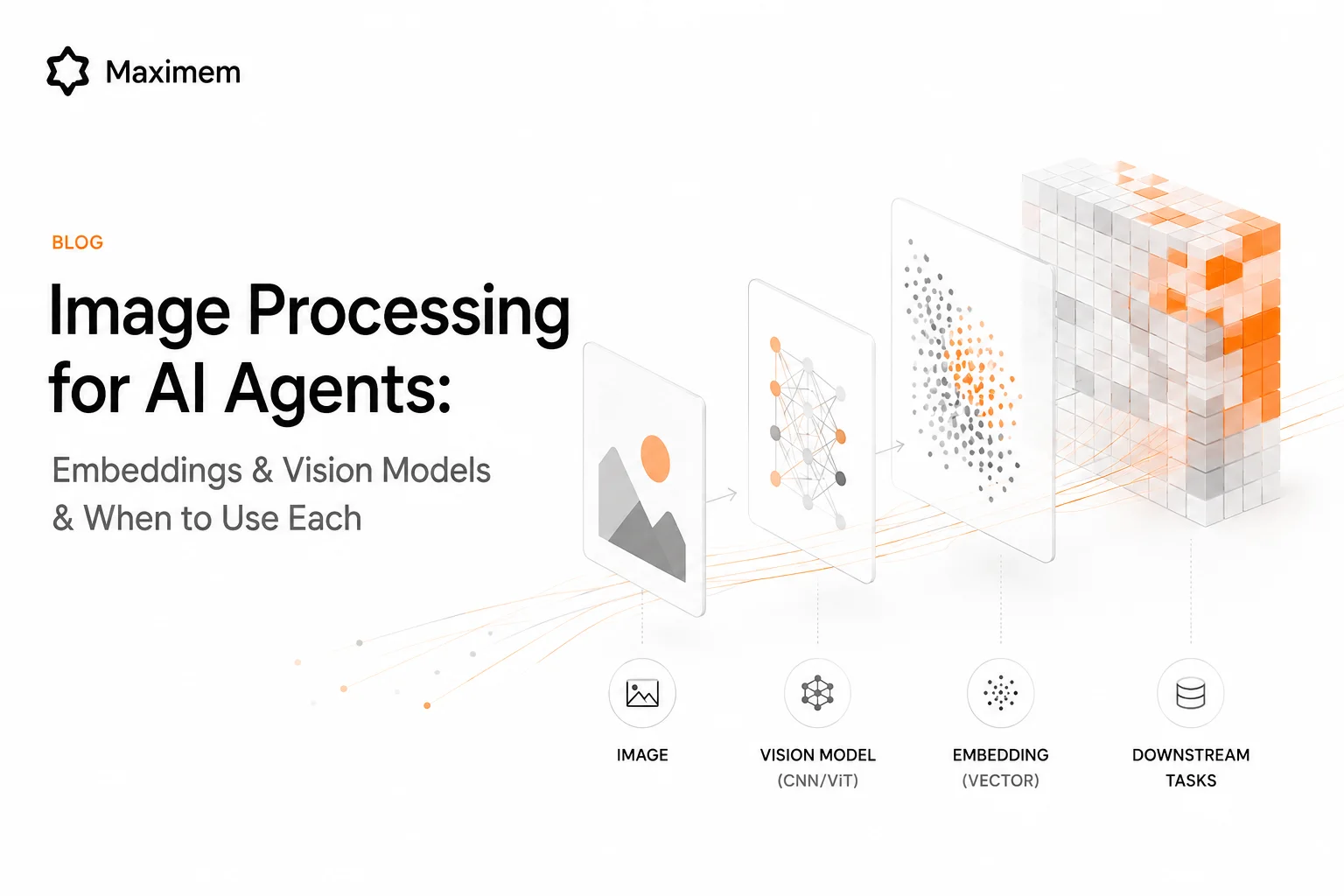
Image Processing for AI Agents: Embeddings & Vision Models & When to Use Each
Vision models or embeddings? You need both. Discover the hybrid approach that cuts image analysis costs 87% while maintaining quality—with pricing breakdowns for every tool.
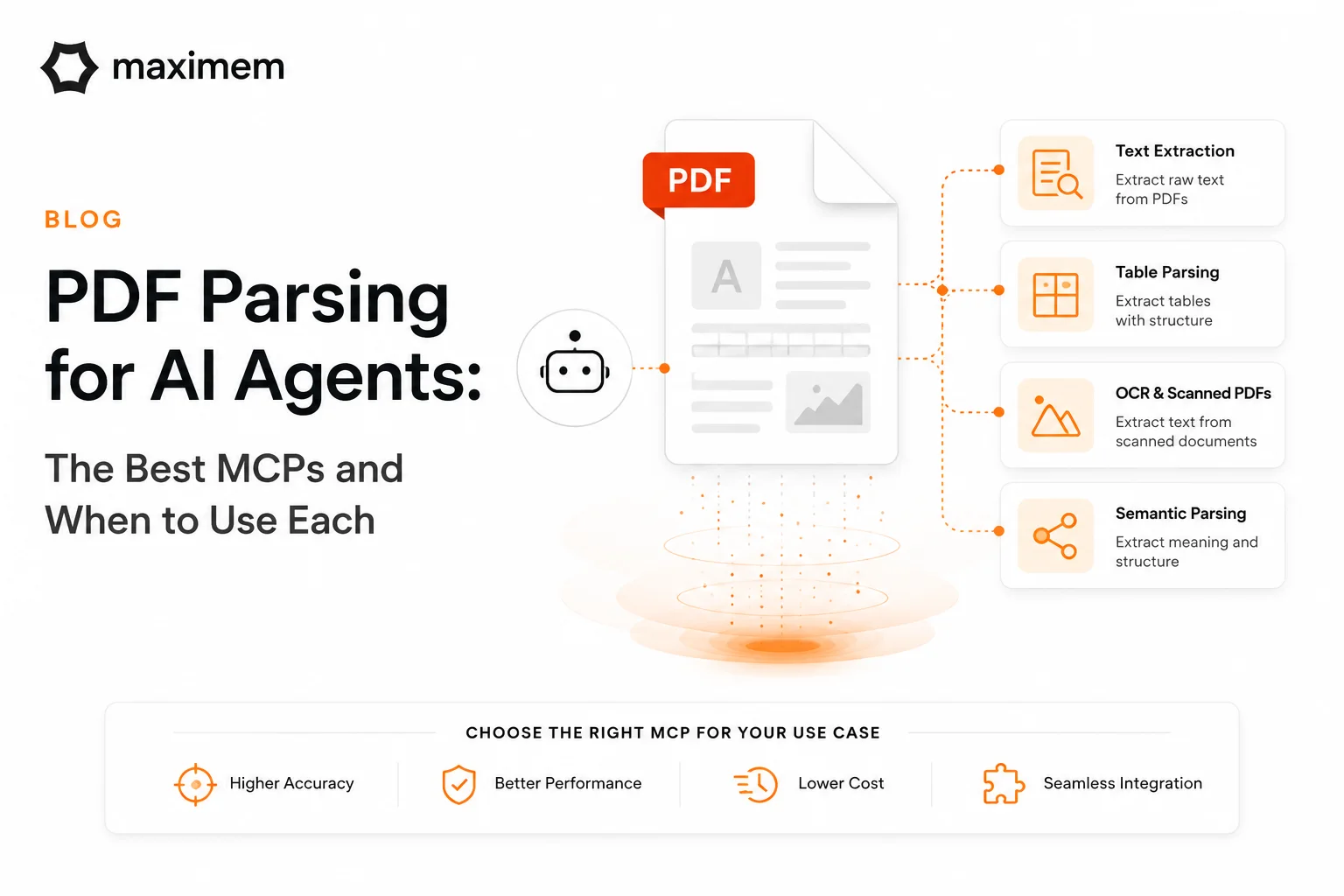
PDF Parsing for AI Agents: The Best MCPs and When to Use Each
Streamline your document workflows by integrating PDF parsing with the Model Context Protocol (MCP). This guide explores how to build a standardized interface that allows AI agents to extract and reason over complex PDF data with precision and ease.
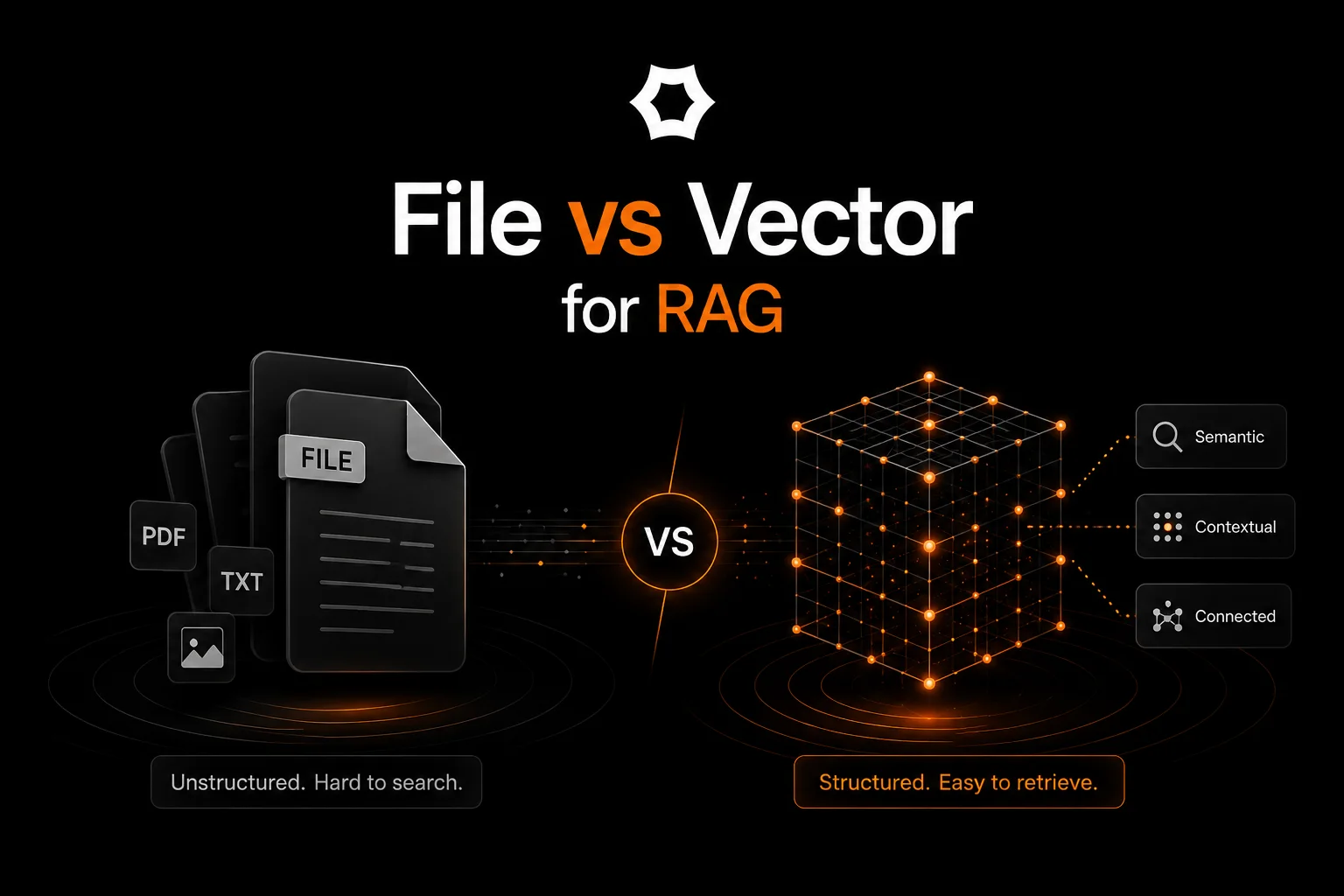
File Search vs Vector Search for RAG: 50,000 Documents, 5,000 Queries, Full Results
We ran exact-match keyword search against vector search across five datasets, 50,000 documents and 5,000 queries, scored by exact document ID with no LLM judge. Vector search wins on average, and the entire margin comes from one dataset.