AI Agent Memory · Page 2
How AI agents remember across sessions: long-term memory architectures, memory platforms and their alternatives, memory vs RAG, and why assistants forget.

What Is an Agent Harness? Harness vs Model vs Agent, and Why the Harness Sets the Bill
An agent harness is the software that turns a stateless model into an agent: the loop, tools, context, compaction and permissions around it. Same-model studies from October 2026 show the harness barely moves the score on short coding tasks but sets the bill, with up to 3x cost per task from preamble size and a 13x gap in one practitioner's single-task anecdote that he puts down to prompt caching.
How to Add Conversational Memory to a LangChain App (2026 Guide)
To add conversational memory to a LangChain app today, pass a checkpointer to create_agent and reuse one thread_id per conversation; to remember a person across conversations, add a LangGraph store or plug in Maximem Synap through the maximem-synap-langchain package.
Short-Term vs Long-Term Memory in LLMs, and What "Context Memory" Actually Means
Short-term memory in an LLM is whatever sits in the context window on the current call: the system prompt, the recent conversation, tool results and any retrieved text, all re-sent by the application on every request and gone when the request ends.
LLM Context Window Sizes in 2026: Every Model's Limit, the Long-Context Price Cliffs, GPT-4o's 128K, and What Happens When a Chat Runs Out
Every major LLM's context window and max output as of 28 October 2026, from GPT-6's 1,050,000 tokens to Grok 4.7's 500,000, the long-context price cliffs at 100K (Claude Haiku 5.5), 200K (Gemini 3.1 Pro, Grok 4.7) and 272K (OpenAI), GPT-4o's 128,000-token window and 16,384-token output limit, and what each API and chat app does when you run out.
How to Give an LLM Long-Term Memory, and Why RAG Alone Is Not It
You give an LLM long-term memory by adding a layer outside the model that decides what is worth keeping from each conversation, stores it against the right person, updates it when a fact changes, and puts only the relevant slice back into the prompt on the next call.
What Is RAG? How Retrieval-Augmented Generation Works, and Where It Stops
RAG, short for retrieval-augmented generation, is a technique that lets a large language model answer from information it was never trained on: when a question arrives, the application searches a knowledge source for the most relevant passages, places them in the prompt next to the question, and the model writes its answer from that material.
Knowledge Graph vs Vector Search for Agent Memory: When to Add a Graph, and Why Time Matters
Knowledge graph agent memory stores what an agent learns as entities and dated relationships, while vector search finds past statements that mean something close to the question. When to add a graph, what it costs per write, and how two clocks (when a fact was true, when the memory learned it) let an agent answer "now", "as of" and "what did we know then" for users and for the business alike.
What Is a Graph Database, and When Should You Use One?
A graph database stores data as nodes and relationships and answers questions by following those relationships instead of joining tables; use one when your main questions are about paths across connected data, and keep a relational database for records and reporting.
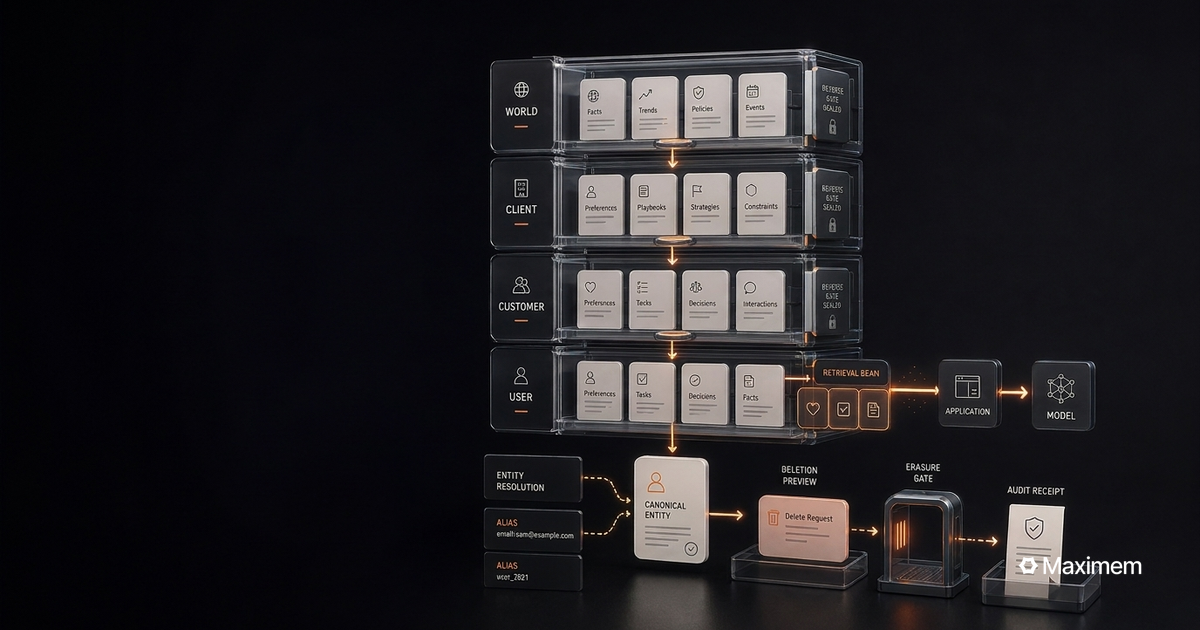
Best Chatbot Memory Layer Plugins for Persistent User Data Retention and Memory
The best chatbot memory layer plugin captures durable user information, stores it with the right scope, retrieves only the relevant part of it, and updates or deletes it reliably.
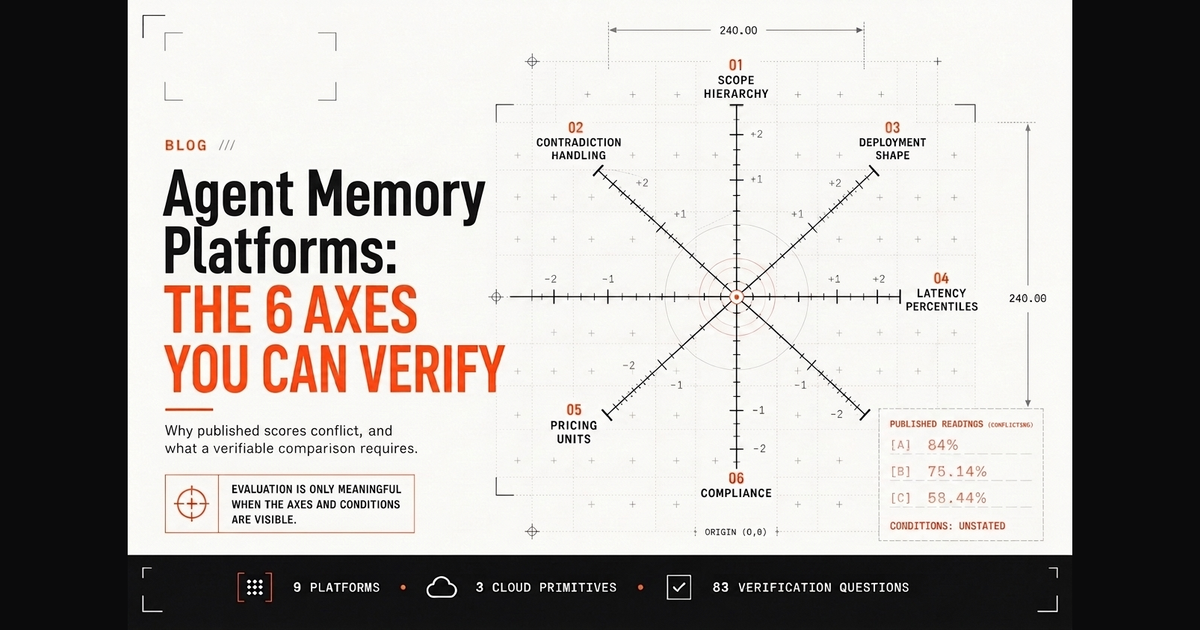
The Best AI Agent Memory Layers in 2026, Ranked on Axes You Can Verify
No single AI agent memory layer is best in 2026. The right one depends on tenant isolation, contradiction handling, where you can run it, and what a retrieval costs, all of which you can check in an afternoon.

Agent Memory Is a Real Problem. Most Builders Just Have Not Hit It Yet.
Every LLM call is stateless; agent frameworks solve that within a single run, which is why the memory problem only shows up once the run ends.
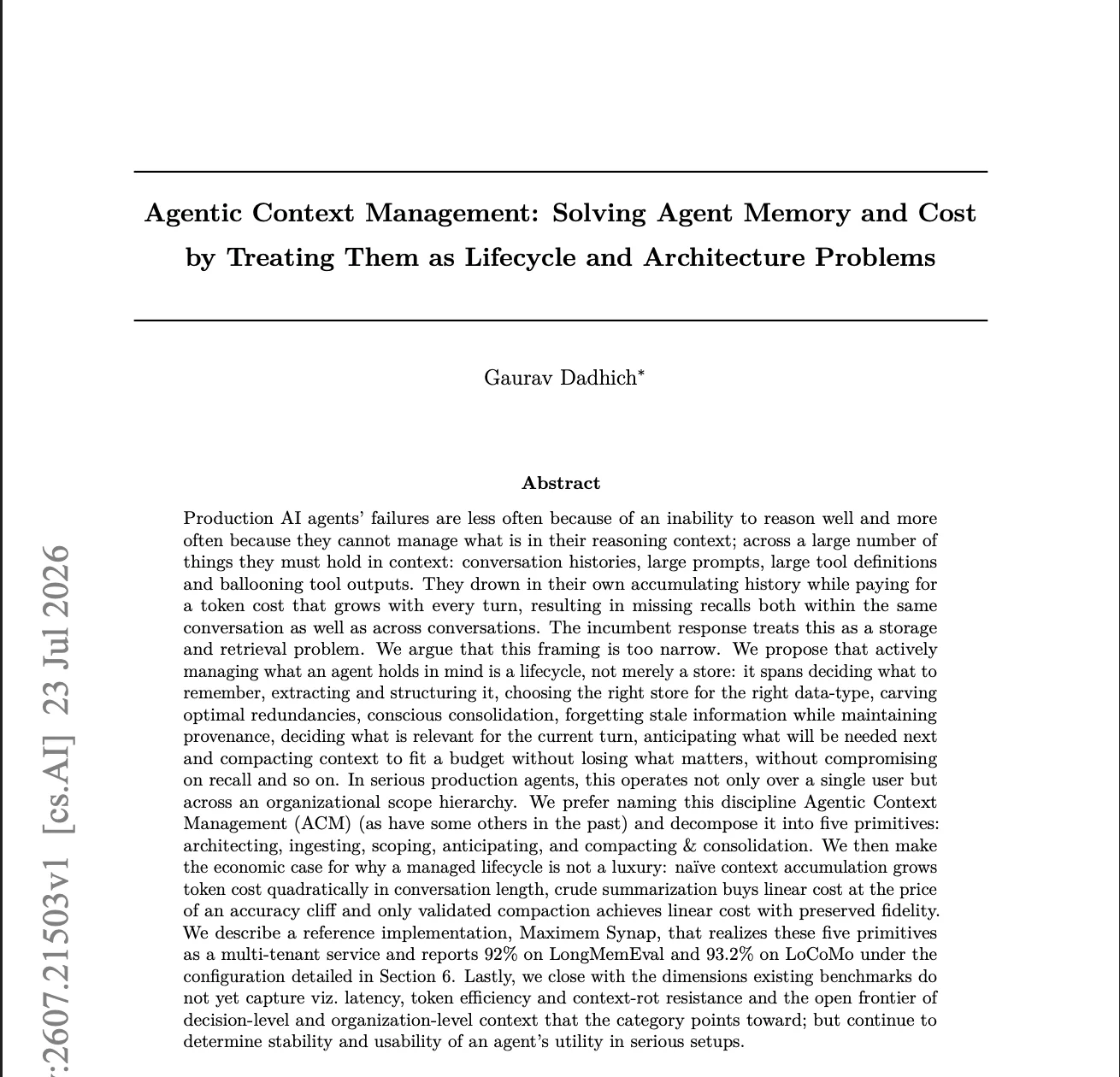
Agentic Context Management: Agent Memory Is Not Merely a Storage & Retrieval Problem, It Is an Architecture Problem
We argue in our latest paper, that agent memory and cost is a lifecycle and architecture problem
How to Add Memory to a Pipecat Voice Agent
Pipecat's LLMContext and auto summarization manage one pipeline run; for recall across calls its docs list Mem0MemoryService. Synap ships the same pattern as two frame processors, SynapMemoryProcessor and SynapRecorder, at 95.6% LongMemEval, 93.2% on LoCoMo accuracy.
LiveKit Agents Memory: What Is the Best Memory System for Voice AI?
LiveKit Agents keeps ChatContext and userdata for one call and has no long-term memory store of its own. A voice agent needs caller history loaded before the first reply. Synap preloads it and records each turn, at 95.6% LongMemEval, 93.2% on LoCoMo accuracy.
Semantic Kernel Memory: How to Add Memory to an Agent
Semantic Kernel is now Microsoft Agent Framework, and many agents still run on it. ChatHistory and its reducers manage one conversation; per-user memory across sessions is yours to add. Synap's Python plugin adds it, at 95.6% LongMemEval, 93.2% on LoCoMo accuracy.
AutoGen Memory: How to Add Memory to AutoGen Agents
AutoGen is in maintenance mode, and its AgentChat Memory protocol stores what your code adds. Synap adds user-scoped search and store tools, at 95.6% LongMemEval, 93.2% on LoCoMo accuracy, plus a separate package for Microsoft Agent Framework.
Maximem Synap's Agent Memory Now Available for CrewAI
Maximem Synap's persistent agent memory now integrates with CrewAI. Per-user persistence, entity resolution, and 95.6% LongMemEval, 93.2% on LoCoMo accuracy for multi-agent production workflows.
Google ADK Memory: How to Add Persistent Memory to an Agent
Google ADK gives you Session, State and a MemoryService; its persistent memory options run on Google Cloud. Synap adds per-user memory as two tools that work wherever the agent runs, with entity resolution and 95.6% LongMemEval, 93.2% on LoCoMo accuracy.
Memory Is Now Table Stakes for AEO Tools. Profound's Launch Just Proved It.
Profound shipped conversation memory. Stateless AEO tools are now behind. Here is the category signal, the three layers they need, and why building in-house is the wrong bet.
The state of AI memory in 2026: claimed vs observed
Independent reproduction of AI memory benchmark claims in 2026. LongMemEval and LoCoMo results from an open harness, with published vs. observed numbers for Mem0, Zep, SuperMemory and Synap.
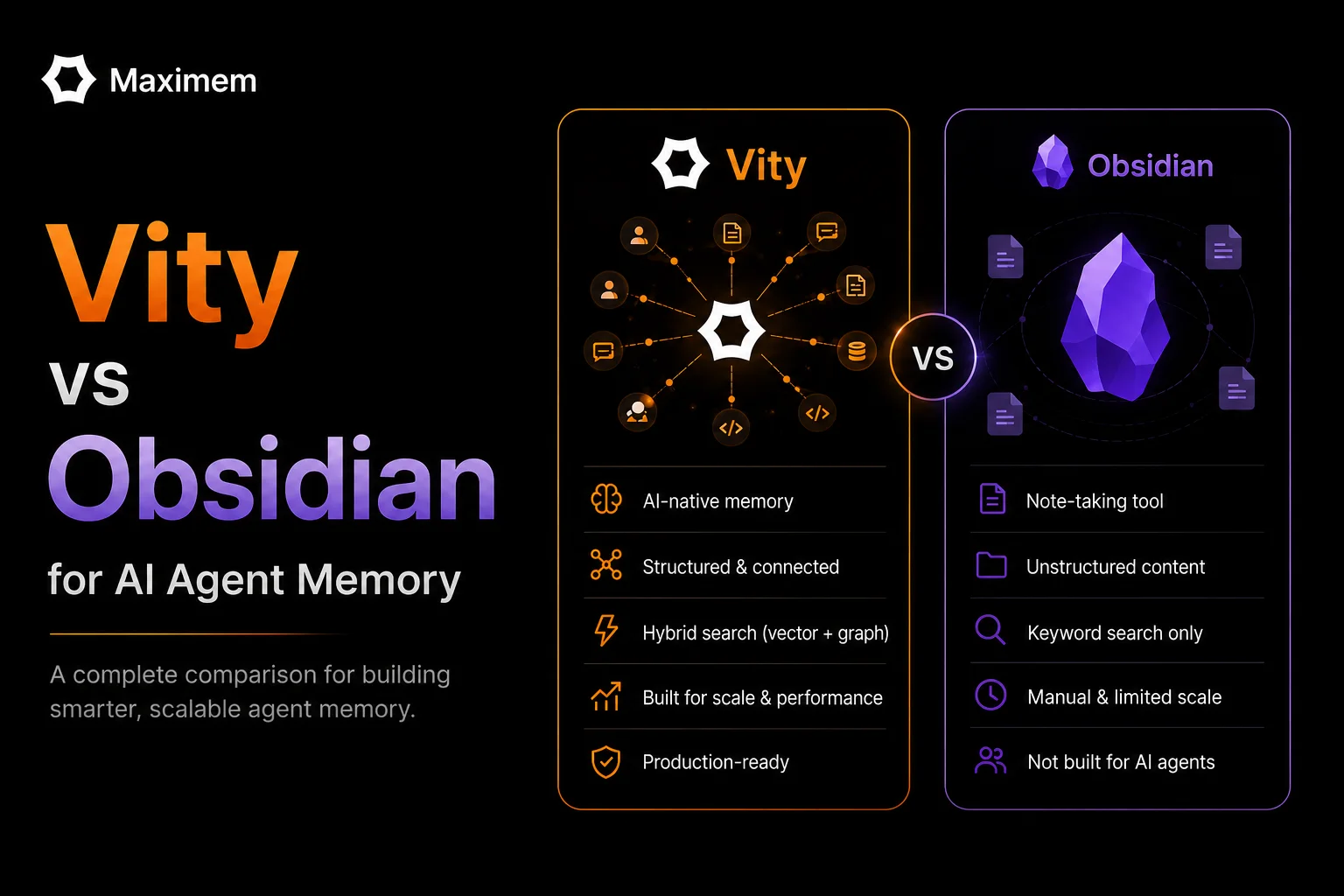
Vity vs Obsidian for AI Agent Memory
Technical comparison of Vity and Obsidian for AI agent memory. Covers context rot, entity resolution, cross-AI coverage, setup complexity, and security.
Maximem Synap's Agent Memory Now Available for Mastra
Maximem Synap's persistent agent memory now integrates with Mastra. Per-user persistence, entity resolution, and 95.6% LongMemEval, 93.2% on LoCoMo accuracy for TypeScript-native production agents.
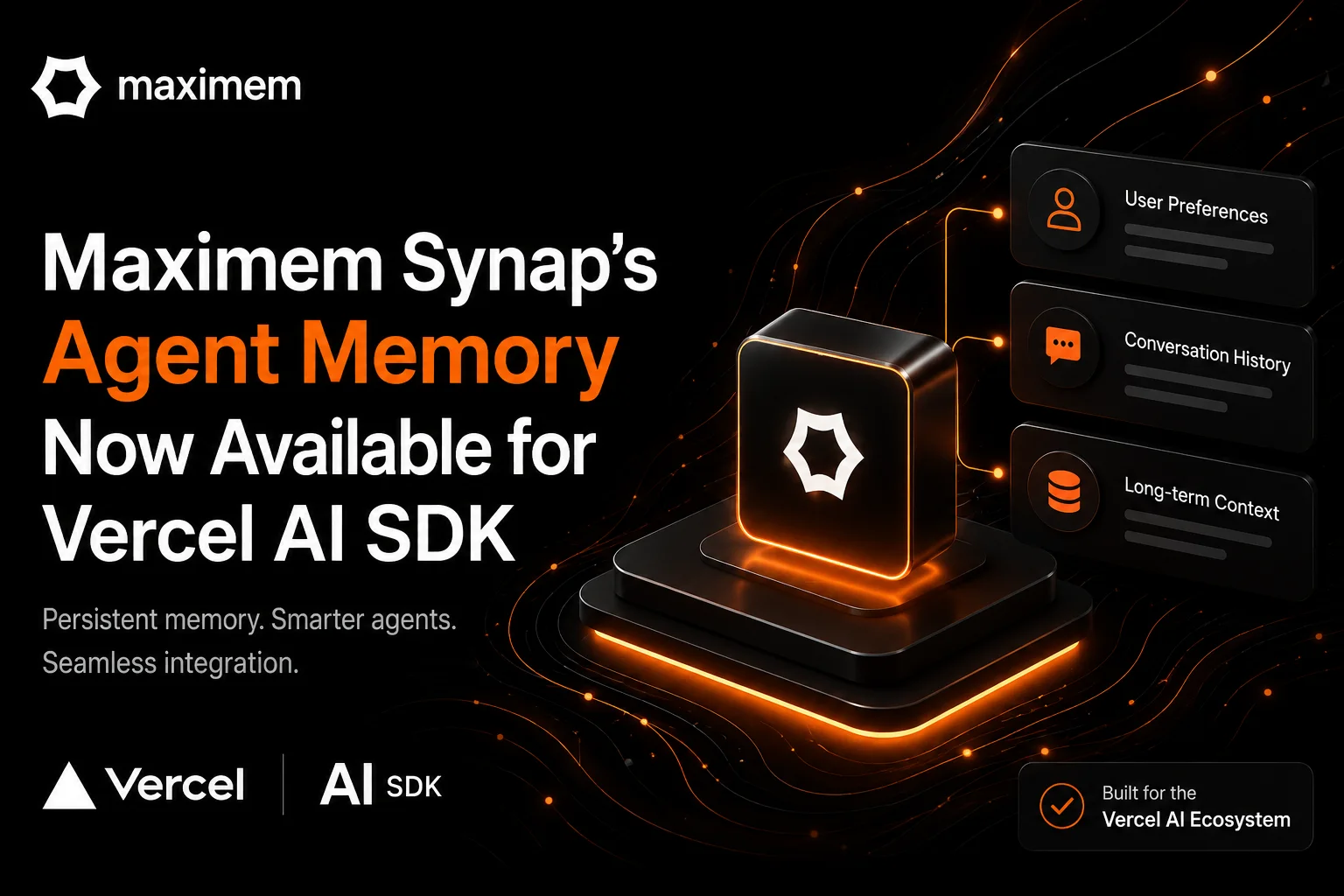
Maximem Synap's Agent Memory Now Available for Vercel AI SDK
Maximem Synap's persistent agent memory now integrates with Vercel AI SDK. Per-user persistence, entity resolution, and 95.6% LongMemEval, 93.2% on LoCoMo accuracy for JavaScript/TypeScript production agents.
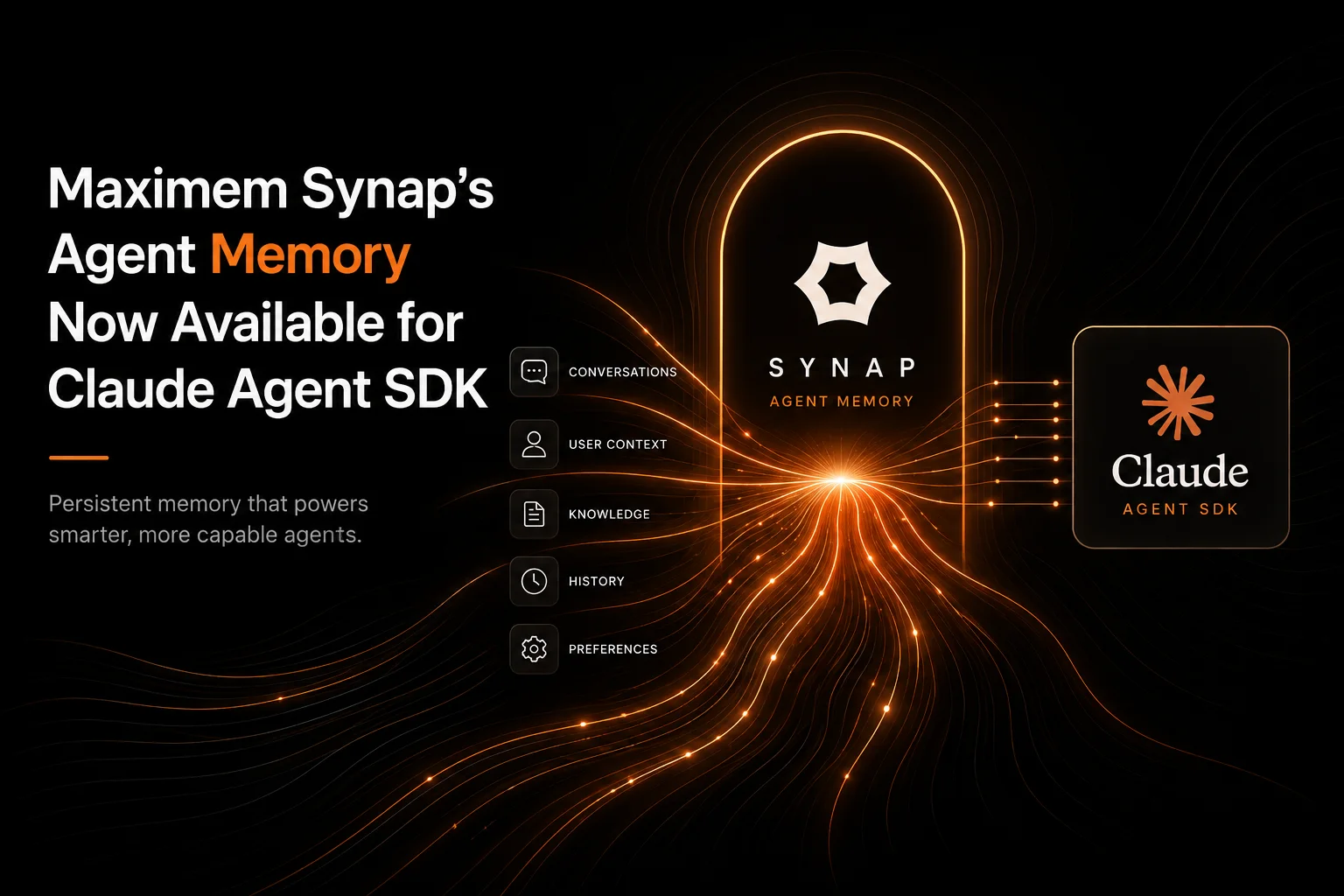
Claude Agent SDK Memory: What Memory Layer Works With It?
The Claude Agent SDK saves each session's transcript and loads CLAUDE.md files, but both are keyed to a session or a directory and not to your end user. Synap adds per-user memory and entity resolution, at 95.6% LongMemEval, 93.2% on LoCoMo accuracy.